
Early Britain
The first people to live in Britain were hunter-gatherers, in what we call the Stone Age. For much of the Stone Age, Britain was connected to the continent by a land bridge. People came and went, following the herds of deer and horses which they hunted. Britain only became permanently separated from the continent by the Channel about 10,000 years ago.
- 10,000 years ago: Britain separated from the continent.
- 6,000 years ago: First farmers arrived.
- Stonehenge: Located in Wiltshire, likely used for seasonal ceremonies.
- Skara Brae: Located in Orkney (Scotland), the best-preserved prehistoric village.
The first farmers arrived in Britain 6,000 years ago. The ancestors of these first farmers probably came from south-east Europe. These people built houses, tombs and monuments on the land. One of these monuments, Stonehenge, still stands in what is now the English county of Wiltshire. Stonehenge was probably a special gathering place for seasonal ceremonies. Other Stone Age sites have also survived. Skara Brae on Orkney, off the north coast of Scotland, is the best preserved prehistoric village in northern Europe and has helped archaeologists to understand more about how people lived near the end of the Stone Age.
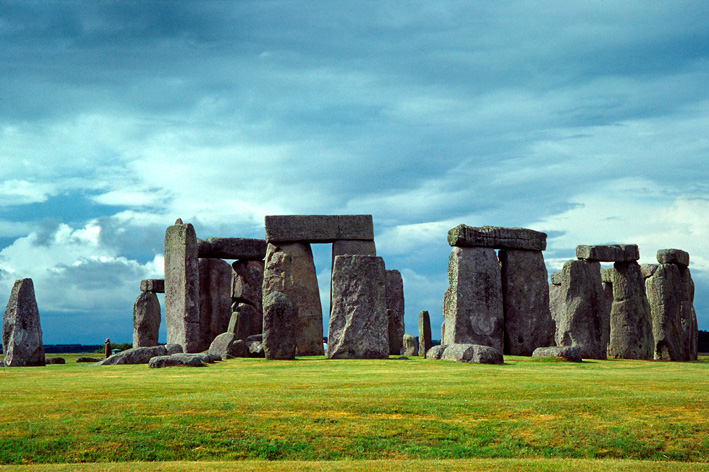
Stonehenge
Around 4,000 years ago, humans learned to cast bronze. This period is known as the Bronze Age. People lived in round houses and buried the dead in burial mounds. The people of the Bronze Age were highly skilled metalworkers, crafting many exquisite items from bronze and gold, including tools, jewellery, and weapons. Following the Bronze Age was the Iron Age, where people learned to make weapons and tools from iron. People continued to live in round houses, gradually forming larger settlements, sometimes building fortifications, or hill forts.
Today, an impressive hill fort can still be seen at Maiden Castle in Dorset, England. Most people at that time were farmers, artisans, or warriors. Their language belonged to the Celtic language family. Similar languages were used throughout Europe during the Iron Age, and related languages are still spoken today in parts of Wales, Scotland, and Ireland. The people of the Iron Age possessed a highly developed culture and economy. They minted the first coins in Britain, some of which were inscribed with the names of Iron Age kings. This marks the beginning of British history.
Quiz Section (answer yourself):
- Where is Skara Brae located?
- What was Stonehenge likely used for?
The Romans in Britain
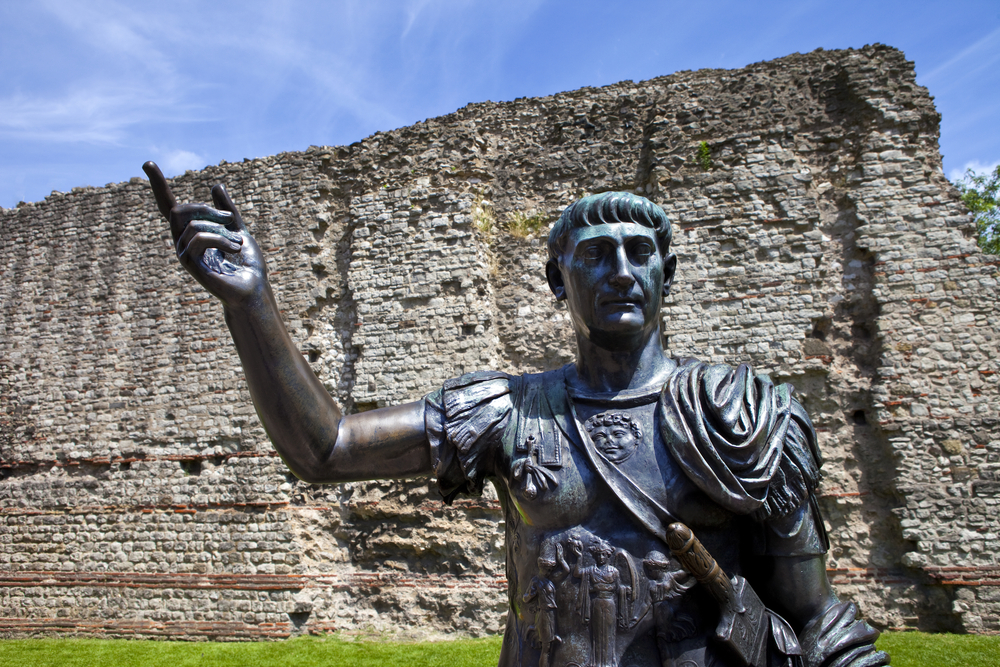
The Roman Britain
In 55 BC, Julius Caesar led the Roman army to invade Britain. This invasion ended in failure, and Britain was separated from the Roman Empire for nearly a century. In 43 AD, Emperor Claudius again led the Roman army in a campaign. This time, some British tribes resisted, but the Romans ultimately conquered almost all of Britain. One of the tribal leaders who fought against the Romans was Boudica, queen of the Iceni tribe in what is now eastern England. She is still revered today, and her statue stands on Westminster Bridge in London, near the Houses of Parliament.
Parts of present-day Scotland were never conquered by the Romans. Emperor Hadrian built a wall in northern England to defend against the Picts (ancestors of the Scots). Several forts were built on the wall. Remnants of Hadrian's Wall, including Fort Hostard and Fort Wendolanda, are still visible today. This area is a popular hiking destination and a UNESCO World Heritage Site.
The Romans ruled Britain for 400 years. They built roads and public buildings, established a legal system, and introduced new flora and fauna. The first Christian communities were established in Britain in the 3rd and 4th centuries AD.
The Anglo-Saxons
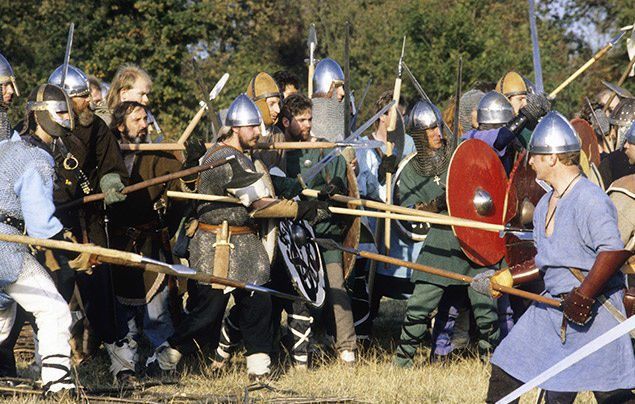
The Anglo-Saxons
The Anglo-Saxons: In 410 AD, Roman troops left Britain to defend other parts of the Roman Empire and never returned. Britain was again conquered by tribes from Northern Europe: the Jutes, Angles, and Saxons. Their languages formed the basis of modern English. People fought against these invaders, but by around 600 AD, Anglo-Saxon kingdoms were established in Britain. These kingdoms were mainly located in what is now England. One king's tomb is located at Sutton Hoo in present-day Suffolk. This king was buried with his treasures and armour; all his belongings were loaded onto a ship and then covered with a mound. Parts of western England, including much of present-day Wales and Scotland, were not under Anglo-Saxon rule.
The Anglo-Saxons were not Christians when they first came to Britain but, but during this period, missionaries came to Britain to preach about Christianity. Missionaries from Ireland spread the religion in the north. The most famous of these was St Patrick, who would become the patron saint of Ireland (see page 77 for more about patron saints), and St Columba, who founded a monastery on the island of Iona, off the coast of what is now Scotland. St Augustine led missionaries from Rome, who spread Christianity in the south. St Augustine became the first Archbishop of Canterbury (see page 77 for more about the Archbishop of Canterbury and the Church in Britain today).
The Vikings
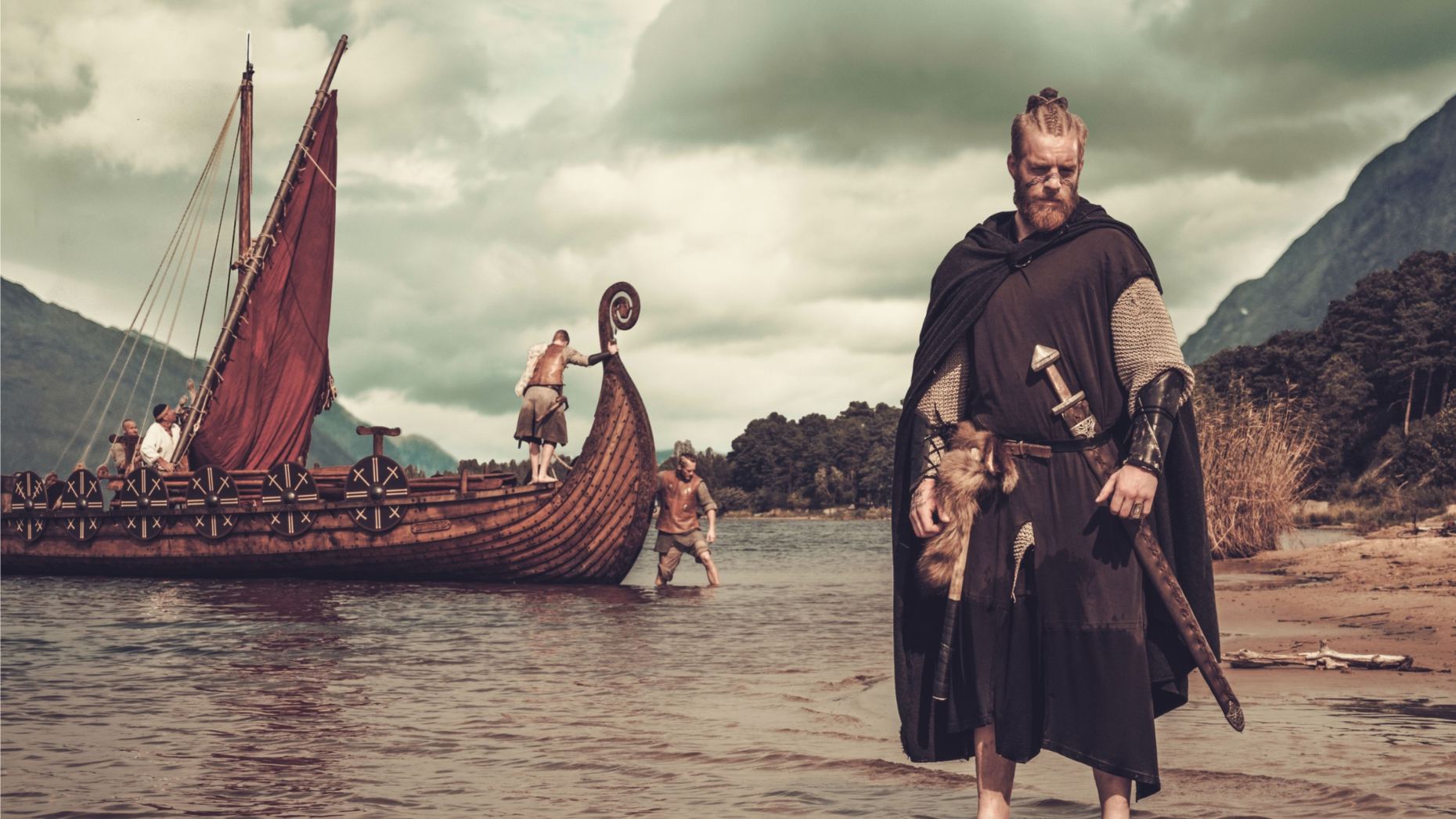
The Vikings in Britain
The Vikings originated from Denmark, Norway, and Sweden. They first arrived in Britain in 789 AD, raiding coastal towns and plundering goods and slaves. They later settled in eastern England and Scotland, establishing their own communities. The Anglo-Saxon kingdoms of England, united under Alfred the Great, defeated the Vikings. Many Vikings remained in Britain, particularly in the east and north, in what is known as the Danish-French region (where many place names, such as Grimsby and Scunthorpe, are derived from Old Norse). The Vikings assimilated with the local inhabitants, and some converted to Christianity.
Anglo-Saxon kings continued to rule what is now England, with the exception of brief periods of Danish rule. The first Danish king was Cnut, also known as Canute.
In the north, the threat of Viking raids prompted the local inhabitants to unite under King Kenneth MacAlpin. The term "Scotland" began to refer to this land.
The Norman Conquest
Normans
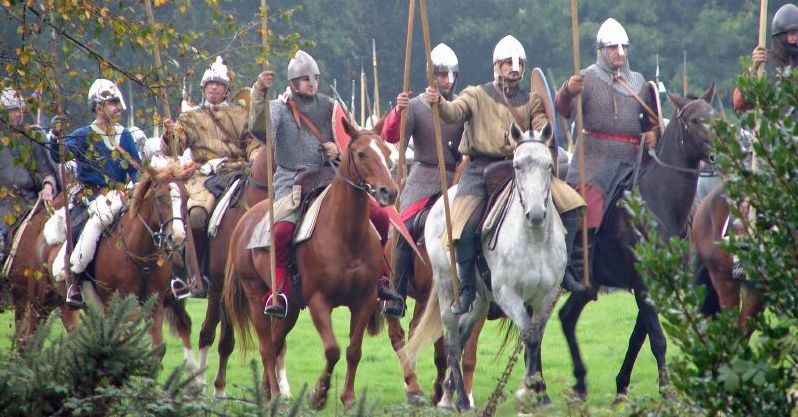
In 1066, William, Duke of Normandy (located in what is now northern France), led an invading force that defeated Harold, King of Saxon England, at the Battle of Hastings. Harold was killed in action. William became King of England and was known as William the Conqueror. This battle was depicted on a beautiful tapestry—the Bayeux Tapestry—which is still preserved in France.
The Norman Conquest was the last successful foreign invasion of England, leading to numerous changes in government and society. Norman French, the language of the new ruling class, had a profound influence on the development of English as we know it today. Initially, the Normans also conquered Wales, but the Welsh gradually reclaimed their lost territory. The Scots and Normans fought on the border between England and Scotland; the Normans occupied the border regions but did not invade Scotland.
William the Conqueror sent messengers throughout England to compile a register of all towns and villages. The people living there, the landowners, and their livestock were also recorded. This register later became known as the Book of the Last Judgment. It remains well-preserved today, offering a glimpse into English society shortly after the Norman Conquest.
Check that you understand
- The history of the UK before the Romans
- The impact of the Romans on British society
- The different groups that invaded after the Romans
- The importance of the Norman invasion in 1066

